I am Ahalullah, an SEO expert having more than years of experience. I always love to rank Sites and SEO tasks. My Exceptional concentration on quality of work. SEO, Digital Marketing and Social media Marketing. Feel free to reach out to me so we can start planning your next project
Image copyrightGETTY IMAGESImage captionJ Crew's stores are closed because of coronavirus
Fashion firm J Crew has filed for bankruptcy protection, making it the first big US retailer to fall victim to the coronavirus pandemic.
Under the terms of the filing, its main creditors are set to take control of the group in exchange for canceling debts of $1.65bn (£1.3bn).
They are also providing about $400m of fresh financing to keep J Crew's operations afloat.
Its 500 stores have been closed by the pandemic and some will not reopen.
However, the firm has not yet disclosed how many outlets will disappear.
Control of the group will now pass into the hands of Anchorage Capital Group, GSO Capital Partners, and Davidson Kempner Capital Management, which hold large amounts of its debt.
Image copyright CREW
As well as J Crew, the group also owns denim clothing specialist Madewell, which it had planned to spin off as a separate entity before the outbreak of the virus.
J Crew chief executive Jan Singer described the move as a "comprehensive financial restructuring" aimed at allowing the business "to thrive for years to come".
"Throughout this process, we will continue to provide our customers with the exceptional merchandise and service they expect from us, and we will continue all day-to-day operations, albeit under these extraordinary Covid-19-related circumstances," she added.
'A millstone'
Neil Saunders, managing director of GlobalData Retail, said J Crew was profitable at the operating level, but its "crippling" long-term debt "sits on the company's balance sheet like a millstone around its neck".
He said that although the restructuring would give the firm breathing space, it had to address the perception of many shoppers that its clothes were "both boring and bad value for money".
He added: "This process gives the company a chance to survive. However, that survival is not just dependent on reduced debt; it requires a reinvention of the J Crew brand."
Even before the advent of coronavirus, big retailers were suffering in the US, with the rise of online shopping and the decline of shopping malls taking their toll.
Department store chains including Sears and JC Penney - long seen as bellwethers of US retail - have been struggling to survive in recent years, with clothing sales falling particularly sharply.
Sears had 700 stores across the US when it filed for bankruptcy protection in 2018. Although it survived, it now has fewer than 200 outlets.
JC Penney has been ailing for some time. It used to have more than 1,000 locations but now has about 850.
Prime Minister Narendra Modi on Saturday held a series of meetings with key ministers, including Home Minister Amit Shah and Finance Minister Nirmala Sitharaman, and officials of economic ministries to firm up the second stimulus package for sectors impacted by lockdown to curb the spread of coronavirus, sources said.
Prime Minister Narendra Modi and Finance Minister Nirmala Sitharaman (File Photo)
Prime Minister Narendra Modi on Saturday held a series of meetings with key ministers, including Home Minister Amit Shah and Finance Minister Nirmala Sitharaman, and officials of economic ministries to firm up the second stimulus package for sectors impacted by lockdown to curb the spread of coronavirus, sources said.
The prime minister held discussions with Shah and Sitharaman and would have followed up meetings with ministers of key economic ministries such as Micro, Small & Medium Enterprises (MSME), sources said.
The finance ministry, which deferred the release of monthly GST collection numbers on Friday, is also scheduled to make a detailed presentation to the prime minister later in the day on the state of the economy and several initiatives that it plans to undertake to stimulate the Indian economy
The prime minister already had meetings with different ministries including civil aviation, labor, and power on Friday.
He had detailed deliberation with commerce and MSME ministries among others on Thursday with a focus on attracting both domestic and overseas investment and revival of small businesses in the country so that the recovery process is hastened.
During these meetings both the home minister and the finance minister were present.
To mitigate hardships faced by the bottom of the pyramid, the government in late March had announced a Rs 1.7 lakh crore stimulus package comprising free foodgrains and cooking gas to poor and cash doles to poor women and the elderly.
Sources said the government is considering to announce the second dose of relief measures for the segment and a stimulus package for India Inc shortly.
The government had first imposed a 21-day nationwide lockdown beginning March 25 and later extended it till May 3.
The lockdown shut businesses, stopped air and rail travel and restricted movement of people and goods.
Beginning May 4, the government has decided to ease certain restrictions including the opening of industries for green and orange districts which either have nil or a low number of cases. The easing of restriction in specified districts is till May 17 with strict vigil by the local administration.
Unscrupulous wholesale or retail traders who tried to capitalize on the situation and raise prices were often fined
Prices of essential commodities at kitchen markets in the capital fell due to strong monitoring by law enforcement agencies and government measures to protect consumer rights.
Traders said prices initially went up on the first day of Ramadan due to a surge in consumer demand. However, the prices gradually went down with strict price monitoring by the authorities. Unscrupulous wholesale or retail traders who tried to capitalize on the situation and raise prices, were often fined.
According to the Directorate of National Consumer Rights Protection (DNCRP), they fined 1,098 companies and individuals Tk35.55 lakh between April 24 and April 30 for price gouging, said DNCRP Deputy Director Masum Arefin.
Talking to several people including government officials, retailers, and consumers, this Dhaka Tribune correspondent found that with monitoring, prices of most essential items fell by Tk5-30 per kilogram, including rice, onion, ginger, lentils, potato, and garlic.
Onion prices decreased by Tk20 per kg, selling in wholesale markets at Tk36-40 per kg and Tk45-55 per kg in retail. Three days ago onion wholesale and retail prices were Tk56-60 per kg and Tk65-75 per kg respectively.
According to the Trading Corporation of Bangladesh (TCB), prices of at least 10 items went down, including for fine lentils, imported garlic, retail edible oil, dates, palm oil, local garlic, coarse rice, and fine grain rice.
Of these, the price of imported ginger went down the most, by Tk150-200 per kg. Local ginger sold for Tk130-150 per kg, while the imported variety sold for Tk170-180 per kg, both in retail yesterday, down from Tk280-350 per kg, and Tk350-380 per kg respectively, last week.
Rasel Ahmed, a retailer at Rampura Bazar, said: “Though the supply of onion is more than sufficient, its price rose by Tk20 a kg in wholesale markets last week due to Ramadan. But now prices have come down due to low customer turnout.”
Ridoy Ahmed, a wholesaler at Karwanbazar, said frequent drives by mobile courts also helped prices to fall.
At least 10 traders were fined Tk2 lakh in the last three days here, for manipulating the price of onions. Others took notice and did not raise prices, he added.
The price of rice, both fine and coarse, fell by Tk2-8 per kg in both retail and wholesale markets, as traders said new supplies of rice had hit the markets.
Vegetable prices also fall
Prices of several vegetables went down yesterday by Tk5-30 compared to last week.
Aubergine, a staple vegetable in Ramadan, sold in retail markets at Tk40-50 per kg, which was Tk60-70 a kg last week.
Cucumber sold for Tk30-45 per kg, carrots Tk30-40 a kg, tomato Tk20 a kg (which was Tk40-50 a kg earlier), lemon Tk20-40 for four, papaya Tk30-40 apiece, bitter gourd Tk30-40 a kg and green chili for Tk50-70 a kg on Saturday.
Aminur Rasel, from Rampura, said: “With the beginning of Ramadan, magistrates fined a lot of traders overcharging for essential commodities. If these drives continue, it would make Ramadan more manageable for us.”
FILE PHOTO: Josep Tarradellas Barcelona-El Prat Airport is seen empty during Holy Week amid the coronavirus disease (COVID-19) outbreak, in Barcelona, Spain April 10, 2020. REUTERS/Nacho Doce/File Photo
PARIS (Reuters) - Germany, Italy and Spain have joined a call by 12 European Union governments for the EU’s executive body to suspend rules forcing crisis-hit airlines to offer full cash refunds for cancelled flights, France said in a statement on Saturday.
The dozen EU governments, including Paris, urged the European Commission on Wednesday to suspend rules forcing the cash-drained airlines to offer refunds instead of vouchers for future travel because of the COVID-19 pandemic.
“I’m glad a very large majority of member states are supporting my request to authorise airlines and maritime groups to temporarily use vouchers when trips are cancelled, so as to relieve their cash reserves while protecting passengers’ rights to a refund,” French transport minister Jean-Baptiste Djebbari said in a statement.
Airlines across Europe, including Lufthansa and Air France-KLM, have sought state rescues as coronavirus lockdowns have forced them to ground their fleets for more than a month, with no end in sight.
The European Commission, which is set to issue guidelines on how the broader transport industry could gradually restart, has said so far that airlines must follow EU rules and provide refunds for cancelled flights.
They should only issue vouchers if passengers accept them.
Governments in favour of a temporary waiver have said vouchers should be valid for a set period and include the right to reimbursement if they are not used before the expiry date. Protection should also be provided in the case of airline bankruptcies.
Reeling from a severe cash crunch amid global air travel restrictions owing to the coronavirus pandemic, Biman Bangladesh Airlines finally got the approval for a loan of Tk 1,000 crore from Sonali Bank.
The board of directors of the state-run bank gave the nod in its meeting on April 30 on condition that the national flag carrier will give it sovereign guarantee, MohibulHaque, senior secretary of Civil Aviation and Tourism Ministry, told The Daily Star today.
He also said that the finance division of the Ministry of Finance has already given the sovereign guarantee to Sonali Bank on behalf of the national airliner.
Sajjad Hassan, chairman, Board of Directors of Biman, said the bank board approved the loan last week after the national flag carrier gave a proposal seeking a loan of Tk 1,500 crore from it.
Biman sources said the national airliner got the loan under the prime minister's recently announced stimulus package for the coronavirus affected industries and the service sector.
Biman will use the money to meet expenses for permanent operation cost, loan installment to various banks and aircraft lessor and to pay the salaries of its several thousand employees, said Biman Managing Director and CEO M Mokabbir Hossain.
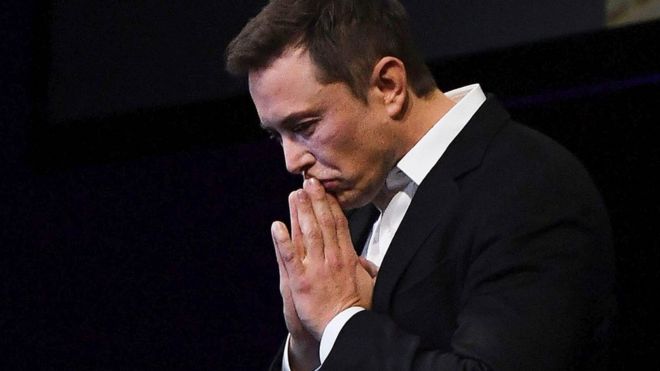
Tesla boss Elon Musk wiped $14bn (£11bn) off the carmaker's value after tweeting its share price was too high.
It also knocked $3bn off Mr. Musk's own stake in Tesla as investors promptly bailed out of the company.
"Tesla stock price too high IMO," he said in one of several tweets that included a vow to sell his possessions.
In other tweets, he said his girlfriend was mad at him, while another simply read: "Rage, rage against the dying of the light of consciousness."
In 2018, a tweet about Tesla's future on the New York stock market led to regulators fining the company $20m and Mr. Musk agreeing to have all further posts on the platform pre-screened by lawyers.
'Headache'
On Friday, the Wall Street Journal reported it had asked the billionaire if he was joking about the share price tweet and whether it had been vetted, receiving the reply "No".
Tesla's share price has surged this year, putting the electric carmaker's value at close to $100bn, a mark that would trigger a bonus payment of hundreds of millions of dollars to the entrepreneur.
"We view these Musk comments as tongue in cheek and it's Elon being Elon. It's certainly a headache for investors for him to venture into this area as his tweeting remains a hot button issue and [Wall] Street clearly is frustrated," Wedbush Securities analyst Daniel Ives told Reuters news agency.
In 2018, Mr. Musk tweeted that he may have secured funding to possibly remove Tesla from the stock market and take it private, which again led to swings in the share price. The Securities and Exchange Commission judged it a market-moving comment, fined him, and forced Tesla to put in place checks to ensure it did not happen again.
But last month, a federal judge said Tesla and Musk must face a lawsuit by shareholders over the going-private tweet, including a claim that Mr. Musk intended to defraud them.
Earlier this week he tweeted to his 33.4 million followers some strong criticism of US stay-at-home restrictions because of the coronavirus pandemic. Last year he found himself in court after tweeting that a British diver as a "pedo guy".
Mr. Musk said the promise to sell his possessions included his house, formerly owned by actor and producer Gene Wilder, and bought in 2013.
"One stipulation on sale," he tweeted, "I own Gene Wilder's old house. It cannot be torn down or lose any of its soul."
Thousands of restaurant workers in Dhaka and across the country are set to get no salaries for April as the shuttered establishments have either laid them off or sent them on leave without pay amid the coronavirus outbreak.
It is one of the first sectors in Bangladesh to get affected badly by the global health crisis, as the presence of customers has started thinning out since late February.
And the countrywide shutdown from March 26 to flatten the spread of coronavirus, whose presence was confirmed in Bangladesh on March 8, simply deflated them.
The correspondent visited the capital's Dhanmondi, Mohammadpur, and Jigatola areas on Saturday. The areas are home to about 800 restaurants, according to restaurant owners, and 99 percent of them were bolted shut.
A handful was open for takeaway through Foodpanda, Uber Eats, Pathao Food, and Shohoz Food.
For most of the restaurant staff, the coronavirus outbreak and the ensuing shutdown has been a cruel joke.
"I have no money to run my family. Now I have to rely on relief," said a restaurant worker, who has been laid off recently.
The government has recently unveiled plans to transfer Tk 2,000 in cash each to about 40 lakh families whose breadwinners have lost jobs because of the shutdown. Hotel and restaurant workers are said to be among the would-be beneficiaries.
"I heard that the government will help restaurant workers. But we haven't received any formal request from the authorities to hand over the list of workers," said Rezaul Karim Sarker Robin, general secretary of the Bangladesh Restaurant Owner's Association.
He urged the government to increase the allocation as well as draw up a list of employees in consultation with restaurant owners so that none is left out.
The number of foodservice establishments is estimated to be about 60,000, including hotel, restaurant and sweetmeat makers, where more than 15 lakh people are working, according to the association and the sector's insiders.
In Dhaka alone, there are about 10,000 restaurants that employ about 3 lakh people, 90 percent of which are now unemployed, according to Robin.
Although the owners are not able to provide salaries, many are buying them essentials like rice, lentil, oil, and potato, he said.
Robin urged the government to take immediate steps to provide cash to those workers as Ramadan and Eid are approaching.
Ashfaq Rahman Asif, managing director of Tarka Restaurant, 128 East and Tahari Avenue, sees a grimmer outlook for the restaurant business in the coming months.
"The problem will not be solved very soon as safety concerns would continue to hurt the business," he said, adding that with zero business, one can't pay space rent, VAT and other service charges.
Tarka and Tahari Avenue are still open for takeaways and home delivery but since the beginning of April, their frequency has nosedived despite taking all kinds of safety measures.
Many restaurant owners have demanded the government exempt them from paying utility bills and the 15 percent VAT on rents.
However, leading global chain restaurants are open and have maintained their full roster of staff.
Seven KFC outlets in Dhaka, one each in Chattogram and Cox's Bazar are open from 11 am to 4:30 pm and eight Pizza Hut outlets in Dhaka and one in Cox's Bazar are open from 12 pm to 4:30 pm.
There is no dine-in service available at the outlets right now; only takeaway and home delivery.
The brands take orders through online platforms and direct calls and customers can pay through credit cards and the mobile financial service provider bKash.
All three outlets of another global pizza chain Domino's in Dhanmondi, Uttara and Banani have been open from 10 are to 5 pm during the pandemic.
"Domino's Pizza made its name by pioneering home delivery service across the globe. So, in this crisis moment, we are confident to serve the customers properly as we follow stringent food safety, hygiene protocol, and own delivery system," said Ahmed Rajeeb Samdani, managing director of Golden Harvest Group, which runs the Domino's chain in Bangladesh.
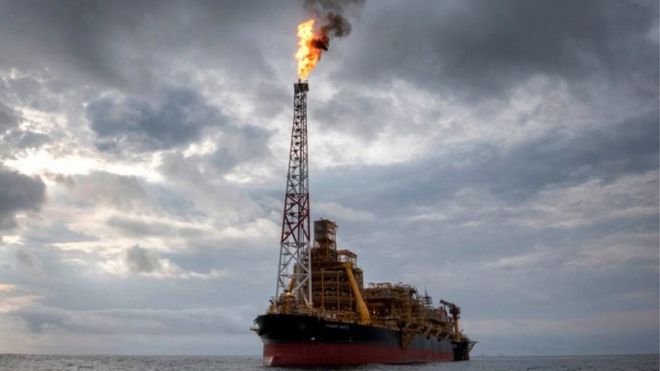
The price of a barrel of Brent Crude - the UK benchmark for oil - has slipped below $20, its lowest level since 2002.
The close to 20% slump follows negative prices being recorded for a barrel of West Texas Intermediate (WTI), the benchmark for US oil.
Negative oil prices on Monday were a "quirk", says one market expert.
The price of US oil - which slumped to minus $37 a barrel at one point - was produced by a trading deadline and is now back to a positive figure.
"Yesterday's price action is best understood as a quirk or peculiarity of futures trading," said analyst James Trafford of Fidelity International.
He reckons the unprecedented price movement confirms that near-term demand is very weak.
"But it isn't cataclysmic," he said. "We don't see negative oil prices as a new normal, going forward."
Oil prices have weakened sharply because of a combination of oversupply and a collapse in global demand due to the decline in economic activity caused by coronavirus lockdown measures.
What happened?
The price of oil that we see reported is actually the future price of oil. Futures are essential contracts to deliver the physical commodity at a later date.
So when we look at oil prices, we are actually seeing the market price for future months.
As the delivery date approaches, these contracts need to be rolled over to the subsequent period.
The price of a barrel of West Texas Intermediate (WTI), the benchmark for US oil, fell into negative territory for the first time in history on Monday.
But that only related to the May contract, which was about to expire.
Traders holding the contract were unable to find buyers because no one with the ability to take delivery wanted it.
"Nobody wants to take delivery of oil next month because there's nowhere to store it, so the price dropped below zero," explained Rachel Winter, associate investment director at Killik & Co.
Storage issues
Image copyrightGETTY IMAGESImage captionTravel restrictions linked to COVID-19 have impacted demand for fuel
The collapse in physical demand for crude products like petrol and jet fuel has left storage hubs at capacity or, as one trader put it: "They're close to the brim."
Storage at US oil hub Cushing has already grown to more than 15 million barrels in the past month - and is expected to soon be at capacity for the first time ever.
"Coronavirus is rewriting the rules of the global economy in front of our very eyes," said Adam Vettese, an analyst at eToro.
"With oil demand virtually non-existent, this quite amazing sell-off is almost entirely down to fears over storage."
Does that mean oil prices will fall further?
"Oil prices and associated equities in the sector will remain broadly weak over the near term," predicted James Trafford.
He said the supply cuts recently agreed by the Opec group of oil-producing economies were not likely to be sufficient to balance the market any time soon.
Opec is believed to be looking to cut oil output immediately, rather than waiting until next month, to ease the pressure on price.
Image copyrightGETTY IMAGES
"While Monday's negative WTI futures price might have been a one-off glitch, it does confirm there is trouble ahead," said Artur Baluszynski, head of research at Henderson Rowe.
"The COVID-19 crisis is destroying the global demand for energy and without a timeline at the end of the lockdown in the developed world, the market is suffering from chronic oversupply."
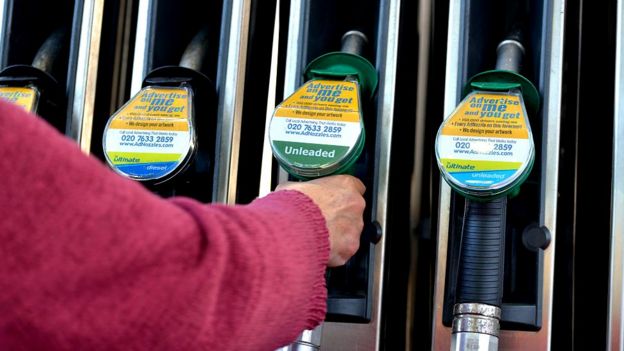
Will the price of petrol fall?
While the price of petrol is linked to the wholesale price of oil, it is driven by competition.
That means that what motorists pay is not directly linked to crude. Instead, suppliers control the prices they sell petrol at.
Crucially, a key factor affecting the price of fuel is that the biggest proportion of the money you hand over for a liter of petrol in the UK goes to the government in the form of tax.
Fuel duty is charged at 57.95p per liter. On top of that, you have to pay VAT at 20% on the cost of petrol.
Below £1 a liter?
Could this week's oil price turmoil see prices drift below £1 for the first time since the late 2000s?
"In theory, petrol prices could fall below £1 per liter if the lower wholesale costs were reflected at the pumps - but at the same time, people are driving very few miles, so they're selling vastly lower quantities of petrol and diesel at the moment," pointed out RAC fuel spokesman Simon Williams.
This means many forecourts will be reluctant to trim their prices any further, he said.
At the same time, he said, more price pressure on petrol could hit the viability of independent garages, which provided "a vital service in areas where the supermarkets don't have a foothold".
"It would be bad news all round if these forecourts shut up shop for good."
Are pump prices fair?
Since the end of March, the wholesale price of petrol has been around the 16p a liter mark, according to the AA.
"Add fuel duty at 57.95p a liter, a generous 9p a liter supplier/retailer margin, plus VAT and the average pump price of petrol would normally be around £1 a liter," said the AA's fuel spokesperson Luke Bosdet.
Instead, the average pump price is higher because the retailers say they need to charge 10p a liter more to offset the lower volumes of fuel they are selling, he pointed out.
Journey levels are at about 40% of normal during the working week, falling to 20% by Sunday.
This meant those who were still driving were being "overcharged on average by more than a fiver a tank".
"I suspect that when the lockdown comes to an end, coronavirus is beaten and driving starts to return to normal, questions will be asked about the fairness of pump prices during the great oil crash of 2020."
Mobile financial service BKash is jointly working with the garment companies and their associated banks to ensure the apparel workers' accounts so that the government can pay their wages directly, said a press release.
The government recently announced that it will pay the export-oriented factory workers from its stimulus fund during the coronavirus crisis days, for which workers’ mobile accounts made mandatory.
The mobile financial service (MFS) provider also emphasized its television advertisement which guides self-registration with Bkash, said the release.
In addition, the workers can open accounts at the selected digital e-registration points of bKash, maintaining social distance.
Workers having no national identification card can use their birth certificate to open the bKash account, mentioned the release.
To open a BKash account, workers need to download the app. Then following a few simple steps and scanning the NID and taking pictures of themselves, they can have their account ready.
No charge is needed to open the account, it added.
Since 2015, more than 4 lakh workers of around 400 garments factories have been receiving salaries through bKash, it releases mentioned.
The release mentioned that the workers need not pay any cash out charge. The BKash and the concerned factories bear the costs.
The IMF on Tuesday projected a GDP growth of 1.9 percent for India in 2020, as the global economy hits the worst recession since the Great Depression in the 1930s due to the raging coronavirus pandemic that has nearly stalled all economic activities across the world.
The IMF said several economies in the region were forecast to grow at modest rates, including India (1.9 percent) and Indonesia (0.5 percent), and others are forecast to experience large contractions (Thailand, -6.7 percent). (Photo: Reuters)
The IMF on Tuesday projected a GDP growth of 1.9 percent for India in 2020, as the global economy hits the worst recession since the Great Depression in the 1930s due to the raging coronavirus pandemic that has nearly stalled all economic activities across the world.
With this subdued forecast, India is likely to record its worst growth performance since the 1991 liberalization. But the International Monetary Fund, in its latest edition of the World Economy report, has placed India as the fastest-growing emerging economies of the world.
It is among the only two major countries, which will register a positive growth rate in 2020. The other being China, for which the IMF has projected a growth rate of 1.2 percent.
"We project global growth in 2020 to fall to -3 percent. This is a downgrade of 6.3 percentage points from January 2020, a major revision over a very short period," Indian--American Gita Gopinath, the IMF Chief Economist said, adding that the COVID-19 pandemic will severely impact growth across all regions.
The Great Depression was the worst worldwide economic downturn that lasted for 10 years from 1929, beginning in the US when the New York Stock Exchange on Wall Street crashed and wiped out millions of investors.
Most countries, in the advanced economy group, are forecast to contract this year, including the United States (-5.9 percent), Japan (-5.2 percent), the United Kingdom (-6.5 percent), Germany (-7.0 percent), France (-7.2 percent), Italy (-9.1 percent), and Spain (-8.0 percent), the IMF report said.
Even with a sharp rebound in the remainder of the year and sizable fiscal support, the Chinese economy is projected to grow at a subdued 1.2 percent in 2020.
The IMF said several economies in the region were forecast to grow at modest rates, including India (1.9 percent) and Indonesia (0.5 percent), and others are forecast to experience large contractions (Thailand, -6.7 percent).
The IMF said that other regions are projected to experience severe slowdowns or outright contractions in economic activity, including Latin America (-5.2 percent) - with Brazil's growth forecast at -5.3 percent and Mexico's at -6.6 percent; emerging and developing Europe (-5.2 percent) with Russia's economy projected to contract by -5.5 percent.
The Middle East and Central Asia (-2.8 percent) with Saudi Arabia's growth forecast at -2.3 percent, with non-oil GDP contracting by four percent, and most economies, including Iran, expected to contract; and sub-Saharan Africa (-1.6 percent) with growth in Nigeria and South Africa expected at -3.4 percent and -5.8 percent respectively.
This is a crisis like no other, and there is substantial uncertainty about its impact on people's lives and livelihoods, Gopinath said.
A lot depends on the epidemiology of the virus, the effectiveness of containment measures, and the development of therapeutics and vaccines, all of which are hard to predict.
Besides, many countries now face multiple crises - a health crisis, a financial crisis, and a collapse in commodity prices, which interact in complex ways, she said.
Assuming the pandemic fades in the second half of 2020 and that policy actions are taken around the world are effective in preventing widespread firm bankruptcies, extended job losses, and system-wide financial strains, Gopinath said the IMF projects global growth in 2021 to rebound to 5.8 percent.
India's growth rate in 2021 is projected at 7.4 percent, while that of China at 9.2 percent. The United States has been projected to grow at 4.5 percent and Japan 3 percent, the IMF report said.
This is a truly global crisis as no country is spared, Gopinath said.
Countries reliant on tourism, travel, hospitality, and entertainment for their growth are experiencing particularly large disruptions, she added.
The emerging markets and developing economies face additional challenges with unprecedented reversals in capital flows as global risk appetite wanes, and currency pressures, while coping with weaker health systems, and more limited fiscal space to provide support. Moreover, several economies entered this crisis in a vulnerable state with sluggish growth and high debt levels, the IMF chief economist wrote.
According to the World Economic Report, the rebound in 2021 depends critically on the pandemic fading in the second half of 2020, allowing containment efforts to be gradually scaled back and restoring consumer and investor confidence.
Significant economic policy actions have already been taken across the world, focused on accommodating public health care requirements while limiting the amplification to economic activity and the financial system.
The projected recovery assumes that these policy actions are effective in preventing widespread firm bankruptcies, extended job losses, and system-wide financial strains, it said.
India is likely to record its worst growth performance since the 1991 liberalization this fiscal year as the coronavirus outbreak severely disrupts the economy, the World Bank said on Sunday.
India's economy is expected to grow 1.5 percent to 2.8 percent in 2020-21 fiscal which started on April 1, the World Bank said in its South Asia Economic Focus report. It estimated India will grow 4.8 percent to 5 percent in 2019-20 fiscal that ended on March 31.


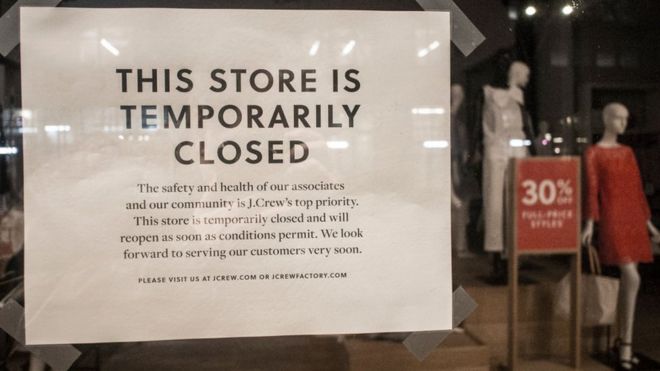 Image copyrightGETTY IMAGES
 Image copyright CREW